Pavement design in Ennis must start with the subgrade. The underlying geology here, largely Carboniferous limestone covered by glacial tills and alluvial deposits along the River Fergus, creates highly variable CBR values across short distances. Our team applies the Transport Infrastructure Ireland (TII) pavement design standards, specifically the NRA DMRB and I.S. EN 13108 series for asphalt materials. Before any layer thickness calculation, we correlate in-situ CBR road testing with laboratory resilient modulus to define the foundation class. The River Fergus floodplain introduces soft, compressible silts that demand a deeper assessment than standard site investigation. We also integrate test pits to verify the depth to competent material and identify any buried organic layers that would compromise long-term pavement performance under County Clare's annual rainfall exceeding 1,000 mm.
A pavement design in Ennis lives or dies by the drainage detail. Without proper sub-surface water management, even a well-graded base course fails within five winters.
Methodology applied in Ennis
- Resilient modulus back-calculation from FWD testing per NRA DMRB
- Asphalt stiffness modulus verification at 20°C per I.S. EN 12697-26
- Subgrade CBR classification per NRA HD 26/06 foundation classes
- Drainage coefficient adjustment for high groundwater areas near the Fergus
- Fatigue and rutting life prediction using Irish axle load spectra
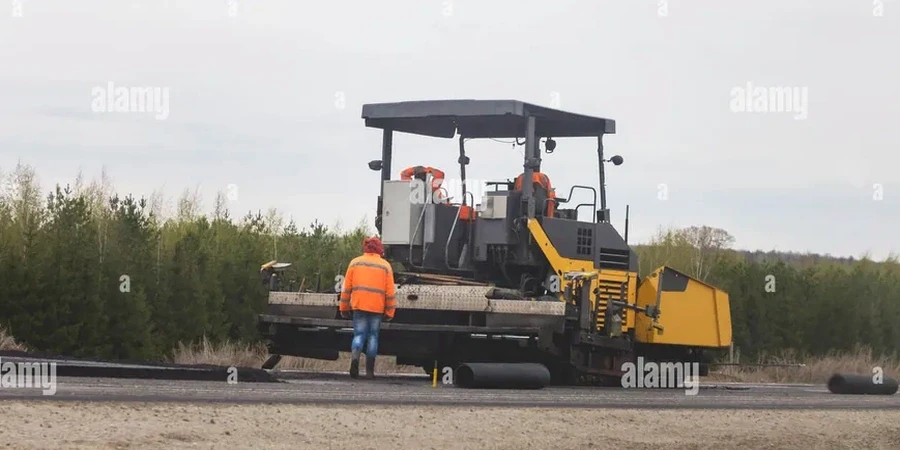
Critical ground factors in Ennis
The most frequent mistake we see in Ennis is treating the pavement as a separate element from the earthworks. A contractor will import a clean crushed limestone base and place it directly over a saturated, low-CBR subgrade without a separation geotextile or capping layer. Within a year, fines pump upward through the stone matrix under traffic load. The result is a loss of structural stiffness that no overlay can fix. Another critical error: designing the drainage system for average rainfall instead of the 1-in-10-year storm event. The flat topography around Ennis, with gradients often below 0.5%, means water ponds on the formation level unless positive crossfall and sub-surface drains are detailed in the construction drawings. We insist on pre-construction CBR testing at formation level, not just at desk-study stage, because the actual condition after a wet winter can be two foundation classes softer than the original site investigation suggested.
Our services
Our Ennis pavement design package covers the full engineering cycle from subgrade evaluation to construction phase supervision. We work directly with road authorities in County Clare to ensure TII compliance and with private developers for industrial yards and residential access roads.
Structural Pavement Design & TII Compliance
Full analytical design using the NRA DMRB method. We calculate layer thicknesses based on foundation class, design traffic in million standard axles, and climatic factors. Deliverables include cross-sections, binder specification, and a pavement quality plan aligned with County Clare road authority requirements.
Subgrade Investigation & CBR Assessment
On-site CBR testing with dynamic cone penetrometer correlation, laboratory soaked CBR per I.S. EN 13286-47, and classification to NRA foundation classes. We map the transition zones between the limestone till ridges and the Fergus floodplain to avoid differential settlement across the pavement footprint.
Questions and answers
What is the typical cost range for a flexible pavement design package for a road project in Ennis?
For a pavement design package covering subgrade investigation, structural layer calculation, and material specification per TII standards, the cost ranges between €1,390 and €4,090 depending on the linear meters of road, number of boreholes required, and whether laboratory resilient modulus testing is needed. A short residential access road with limited testing falls at the lower end, while a commercial access or link road requiring FWD testing, multiple CBR points, and asphalt performance verification reaches the upper range.
How does the NRA DMRB design method account for the soft ground conditions typical of the River Fergus area in Ennis?
The NRA DMRB method classifies the subgrade into four foundation classes based on long-term CBR. In the soft alluvial zones near the Fergus, where CBR often falls below 2.5%, the design automatically triggers a capping layer requirement. This adds 300 to 600 mm of imported granular fill to raise the effective foundation class to Class 2 or 3 before the sub-base is placed. We also apply a drainage coefficient to the layer thickness calculation when the groundwater table is within 1 meter of formation level, a common scenario on the floodplain south of the town center.
What asphalt material specifications do you use for roads in Ennis given the wet Irish climate?
We specify surfacing materials per NRA Series 900, typically a 40 to 50 mm Stone Mastic Asphalt (SMA) with a polymer-modified binder meeting I.S. EN 14023. The polymer modification improves resistance to moisture-induced stripping and provides better fatigue life under the frequent wet-dry cycles Ennis experiences. For binder courses, we use a 60 to 80 mm AC 20 dense binder course with a 40/60 penetration grade bitumen, verified for stiffness at 20°C per I.S. EN 12697-26. In industrial yards with high static loads, we may substitute Hot Rolled Asphalt (HRA) for the surface course to gain better deformation resistance.